


MEDICAL AESTHETIC TECHNOLOGY
Radiofrequency or ultrasound: how is a technology selected?
Radiofrequency and ultrasound are not synonyms. Compare goals, evidence and limits without choosing by intensity or trends.
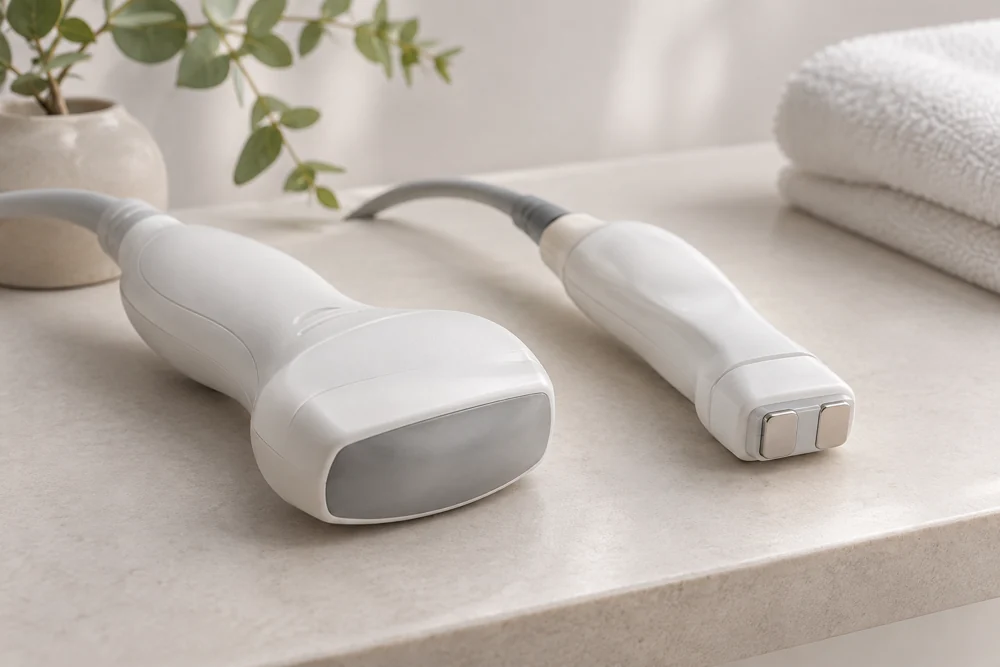
Two different ways to deliver energy
Radiofrequency and ultrasound technologies use different forms of energy. Their effects depend on the device and how it is used. A technology’s general name alone does not describe its depth, indication or safety profile.
What comparisons can tell us
A small trial comparing monopolar radiofrequency with microfocused ultrasound on the face and neck observed improvement with both, without significant differences in the main measures. It does not establish universal superiority or automatically transfer to body treatment.
Evidence should match your objective
Radiofrequency research includes varied devices, areas and protocols. Before accepting an outcome figure, ask whether the study examined the same device and a comparable concern. An average benefit does not precisely predict an individual response.
Not everything needs combining
Having two devices available does not mean combining them is better for you. Ask what each step would contribute, how overtreatment is avoided and when the decision to continue will be reviewed.
A useful comparison
Request a proposal covering the goal, alternatives, uncertainty, discomfort, recovery and total cost. Choosing means evaluating that balance for your case, not seeking the most powerful session or the greatest number of machine functions.